Compiled 2026 · Sources cited throughout

The State of IsraelCreation, structure, and conduct

A source-referenced compilation. Every claim is footnoted.

Key figures at a glance

Every statistic on this page, gathered here. Tap any to jump to its section.
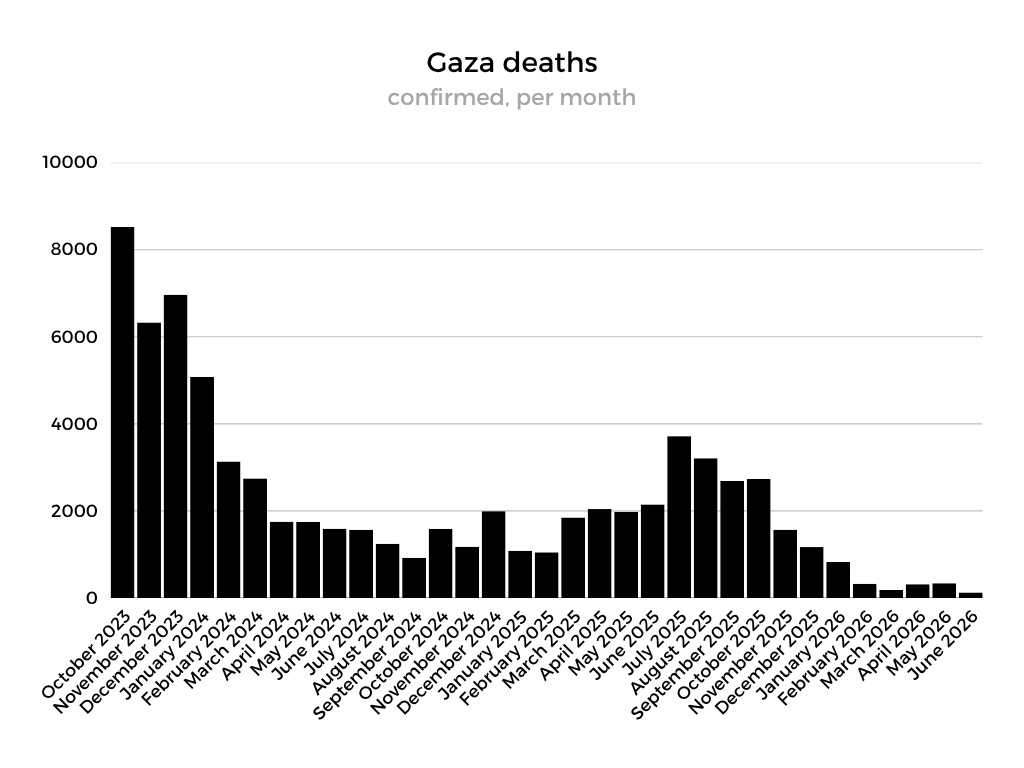
193 UN member states — the frame of reference for recognition figures used throughout → 00 10 Sourced sections in this dossier, each independently footnoted → 00 1948 Declaration of the State of Israel, 14 May → 01 91 Killed in the King David Hotel bombing, 22 July 1946 → 01 1949 Founding of Mossad — after, not before, statehood → 01 0 Written constitutions ratified — governance rests on Basic Laws instead → 02 1949 The “Green Line” armistice — defined as military, not political, borders → 02 Illegal ICJ advisory opinion on Israel’s presence in the occupied territory, July 2024 → 03 700k+ Israeli settlers in the West Bank and East Jerusalem (widely cited estimate) → 03 $3.8B US aid per year under the 2016 MOU (FY2019–2028) → 04 $38B Total value of the 10-year MOU — largest in US history → 04 ~⅓ Share of Israel’s total goods trade with the EU (≈€43B, 2024) → 04 Non-party Israel’s status toward the Rome Statute / International Criminal Court → 05 2 Parallel legal systems applied by nationality in the occupied West Bank → 05 ~$160B Combined US-listed value of major Unit 8200–founded cyber firms (2024) → 06 45+ Countries where NSO’s Pegasus spyware was reportedly deployed → 06 $32B Google’s 2026 acquisition of Wiz, founded by 8200 alumni → 06 2022 Year AIPAC launched its affiliated super PAC for direct electoral spending → 07 Both Parties targeted by AIPAC-aligned spending — bipartisan by design → 07 3 Major rights groups (Amnesty, HRW, B’Tselem) finding apartheid → 08 21·11·2024 ICC arrest warrants issued for Netanyahu & Gallant → 08 ~700 000 Palestinians displaced in the 1948 Nakba → 08 ~150 UN member states recognizing Palestine by Sept 2025 → 08 ~75 000 Palestinians killed between 2023 and 2026 → 08 4 European states banning settlement imports by mid-2026 (ES, NL, IE, BE) → 09 2004 EU decision already excluding settlement goods from preferential tariffs → 09 ~90 Estimated Israeli nuclear warheads (range 80–200; plutonium for 100–200) → 10 0 IAEA inspections of Israel's main nuclear facilities — it is outside the NPT → 10 1992–2025 Span of repeated Israeli warnings that Iran was 'weeks/years' from a bomb → 10 161–5 2014 UN vote urging Israel to join the NPT — non-binding, not complied with → 10 2007 Year the naval blockade of Gaza began → 11 10 Activists killed in the 2010 Mavi Marmara raid → 11 ~450 Activists detained from the Oct 2025 Global Sumud Flotilla → 11 2 Boats that reached Gaza (2008) — the only clean breaks of the blockade → 11
00

About this project

A factual record — not a religious argument, and not a polemic.

This page is an academic compilation of the history and activities of the State of Israel, from the circumstances of its founding to the present day. Its single commitment is factual accuracy. Each paragraph is tied to a numbered source at the bottom of the page, and the reader is invited to challenge any claim through the Propose a modification control beneath it.

The project takes no religious position whatsoever. Judaism as a faith, Jewish people as a community, and the policies of a modern nation-state are three distinct things, and criticism or description of the third is not a statement about the first two. Nothing here should be read as endorsing or opposing any religion, nor as a generalization about any people.

Where the historical record is disputed — casualty counts, the intent behind a decision, the motive for a killing — this dossier flags the dispute instead of resolving it by fiat. Claims that circulate widely online but lack a verifiable basis have been deliberately left out; a short editorial note explains the most notable omissions where relevant.

Propose a modification
01

The creation of Israel

Why, when, and how — and the people who shaped it.

The modern political project of a Jewish state was crystallized by Theodor Herzl, whose 1896 pamphlet Der Judenstaat and the First Zionist Congress of 1897 gave the movement organizational form, largely in response to European antisemitism. Momentum grew with the British government’s Balfour Declaration of 1917, which expressed support for “a national home for the Jewish people” in Palestine. Jewish immigration accelerated sharply during and after the Holocaust.

On 29 November 1947, the UN General Assembly passed Resolution 181, the Partition Plan, recommending separate Jewish and Arab states with Jerusalem under international administration. The Jewish leadership accepted; Arab states and Palestinian leaders rejected it. On 14 May 1948, David Ben-Gurion declared the establishment of the State of Israel; the United States recognized the provisional government within hours, and war with neighbouring Arab states followed immediately [1][2].

The King David Hotel bombing (1946)

Two years before independence, on 22 July 1946, the Zionist paramilitary group Irgun, then led by Menachem Begin — a future Prime Minister — bombed the British administrative headquarters in the King David Hotel in Jerusalem, killing 91 people. This was a pre-state event carried out by a paramilitary organization, not by any Israeli state agency [3].

The founding of Mossad

Israel’s foreign intelligence service, Mossad, was established in 1949 — after the state was founded — and reorganized in 1951 under Reuven Shiloah. It grew out of earlier clandestine bodies, including the pre-state Mossad LeAliyah Bet, which organized illegal Jewish immigration past British restrictions, and the intelligence apparatus of the Haganah. Its role was in consolidating and defending the new state, not in creating it [4].

Propose a modification
02

A state without a constitution or fixed borders

Two structural peculiarities that shape everything that follows.

Israel has no single written constitution. The 1948 Declaration of Independence promised one, but deep disagreement — chiefly between secular and religious visions of the state — made it impossible to agree on a text. Instead, since the 1950 “Harari Resolution,” Israel has been governed by a series of Basic Laws passed incrementally by the Knesset. Several carry constitutional weight, but the set is incomplete and can be amended by ordinary parliamentary majorities [5].

Israel is also unusual in that it has never formally defined its borders in law. The 1948 declaration deliberately avoided specifying frontiers. The 1949 Armistice lines (the “Green Line”) were explicitly described as military, not political, boundaries. Since 1967 Israel has controlled territory beyond those lines — the West Bank, and formerly Gaza and Sinai — and its eastern border with a future Palestinian state remains undetermined to this day [6].

Propose a modification
03

Territory and the settlement enterprise

The shrinking of Palestinian-controlled land, and the state bodies that administer it.

“Greater Israel” (Eretz Israel HaShlema) is an ideological current, not an official state map. It refers to maximalist territorial claims held by parts of the Israeli right and settler movement. No Israeli government publishes an official “Greater Israel” map as national policy. What is documented is a steady expansion of Israeli settlements in occupied territory, which the International Court of Justice in its July 2024 advisory opinion found to be illegal under international law, calling on Israel to end its presence in the occupied territory [7][8].

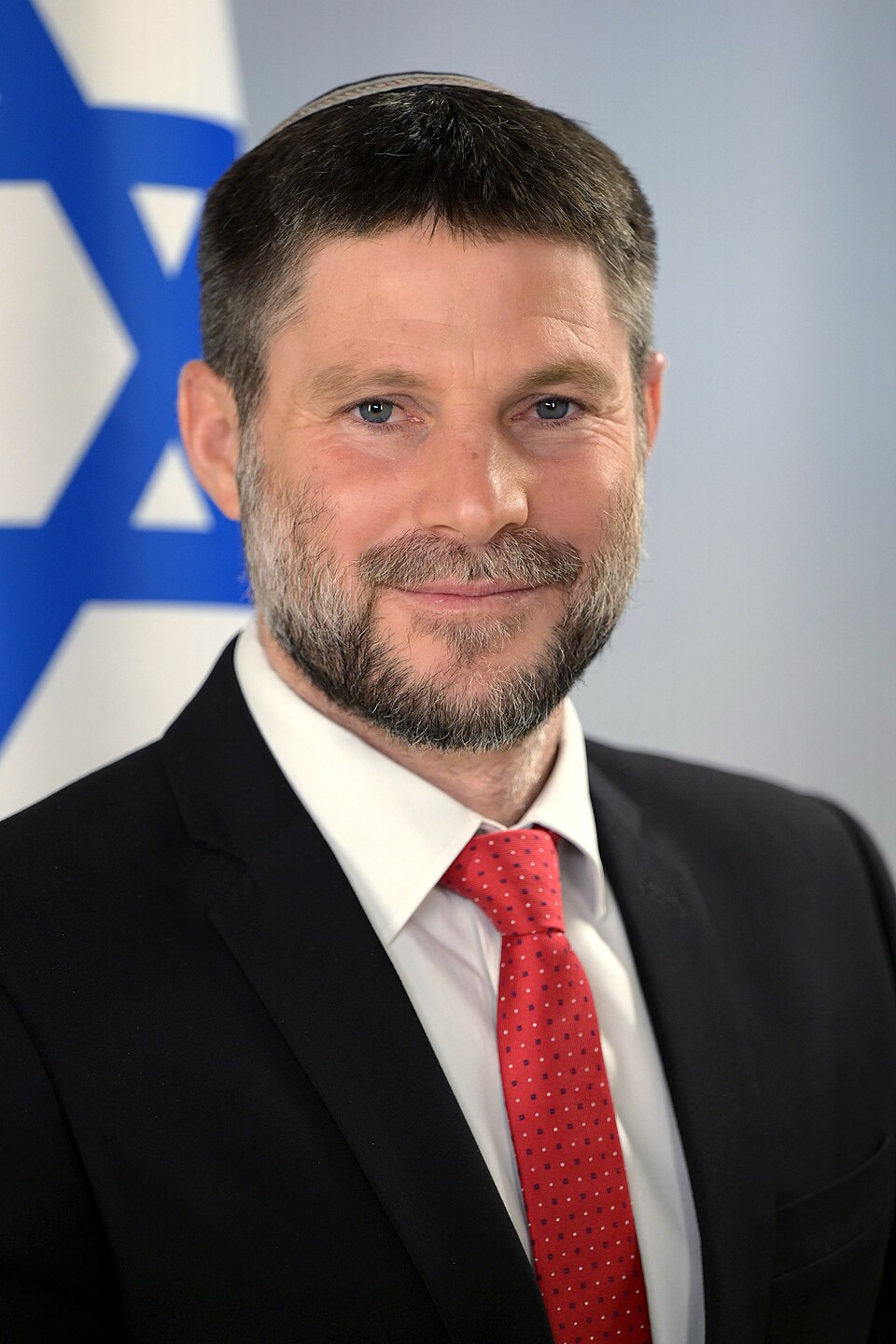
Settlement is administered through identifiable state machinery. The World Zionist Organization’s Settlement Division has for decades channelled state funds into West Bank settlements, and the Israeli government has repeatedly allocated budgets to expand them. Ministers associated with the settlement portfolio, including Finance Minister Bezalel Smotrich (given authority over civilian administration in the West Bank), have openly championed expansion [7].

The territorial timeline

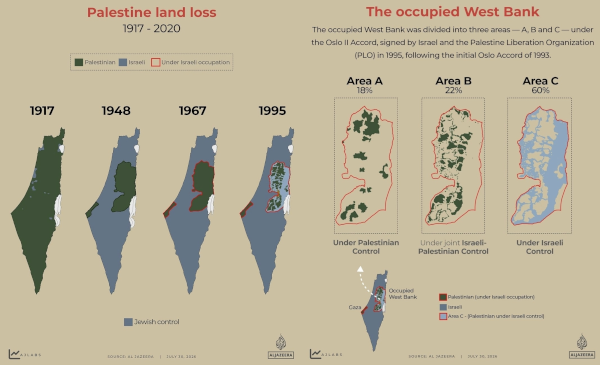
The maps most often reproduced show Palestinian-controlled land contracting across four moments: the 1947 UN partition proposal; the 1949 armistice lines; the post-1967 occupation; and the fragmented present-day West Bank divided into Areas A, B and C under the Oslo Accords. These maps are best read as a schematic of political control rather than a cadastral record [8].

Propose a modification
04

Financing

Where the money comes from — chiefly the United States, and the European market.

The United States is by far Israel’s largest state financial backer. Under the 2016 Memorandum of Understanding — the largest such package in US history — the US committed $38 billion over ten years (FY2019–2028), or roughly $3.8 billion per year: about $3.3 billion in Foreign Military Financing plus $500 million for missile defence. A notable feature is the “Buy American” clause: the FMF grants must be spent on US-made defence products, so the money largely flows back to American defence contractors [9][10].

Since the war that began in October 2023, the US has appropriated substantial additional wartime military aid on top of the MOU — the Council on Foreign Relations reported at least $16.3 billion in direct military aid enacted since October 2023, and other tallies run higher. Cumulative US assistance since 1948 is described by the State Department as “over $130 billion” in nominal terms, with inflation-adjusted estimates considerably larger. These cumulative totals vary by methodology, so they are reported here as a range [9][10].

The European Union

The EU is Israel’s single largest trading partner, accounting for roughly a third of its total goods trade — about €43 billion in 2024 — governed by the EU–Israel Association Agreement, in force since 2000. That agreement is the backdrop to the settlement-trade disputes described in Section 09 [11].

Propose a modification
05

Law and jurisdiction

How Israeli law treats acts committed abroad and in occupied territory.

Like many states, Israel asserts extraterritorial jurisdiction and the right to try or shield its own nationals. In practice this has meant that Israeli citizens are generally prosecuted — if at all — within Israel’s own courts rather than surrendered to foreign or international jurisdiction. Israel is not a party to the Rome Statute of the International Criminal Court and rejects the Court’s jurisdiction over its nationals [12].

A distinct and heavily documented issue is the two-tier legal system in the occupied West Bank: Israeli settlers living there are subject to Israeli civil law, while Palestinians in the same territory are subject to Israeli military law and military courts. Human rights organizations describe this as one person’s civilian rights and another’s military-court exposure applying on the same land, differentiated by nationality — a core element of the apartheid findings in Section 08 [13].

Propose a modification
06

Technology and Unit 8200

A military signals-intelligence unit that became a global tech pipeline.

Unit 8200 is the Israel Defense Forces’ signals-intelligence and cyber-warfare unit — the largest single unit in the IDF, often compared to the US NSA. It has been linked to major operations, including the Stuxnet worm that damaged Iranian nuclear centrifuges and the September 2024 operation using explosive-rigged pagers against Hezbollah [14][15].

Its alumni network is the backbone of Israel’s technology sector. Veterans founded or lead a striking share of the world’s cybersecurity industry: Check Point (Gil Shwed, Marius Nacht, Shlomo Kramer), Palo Alto Networks (Nir Zuk), CyberArk (Udi Mokady), Wiz (Assaf Rappaport and colleagues — acquired by Google in 2026), and consumer names such as Waze and Viber. Check Point’s CEO from December 2024, Nadav Zafrir, is himself a former Unit 8200 commander [14][15][16].

Surveillance software deployed worldwide

The most consequential export is surveillance technology. NSO Group, founded by Unit 8200 alumni Shalev Hulio and Omri Lavie, produces the Pegasus spyware, which can silently compromise a smartphone and extract its contents. Investigations (notably the 2021 “Pegasus Project”) documented its use in dozens of countries against journalists, activists and politicians. Other Israeli surveillance-adjacent firms include Cellebrite (phone forensics), NICE and Verint [14][15].

The AppCloud case in Samsung Galaxy phones

The Israeli-developed app preinstalled on Samsung Galaxy A phones (and on the M and F series) is called AppCloud. It is built by the Israeli company ironSource (acquired by the US firm Unity) and is integrated by default on these devices, aimed mainly at markets in the Middle East, North Africa and West Asia. The app is often described as "bloatware" (unwanted preinstalled software) and draws controversy over its origin, its difficulty to uninstall, and its potential for data collection without explicit user control.

Propose a modification
07

Israel in Western politics

Organized advocacy in the United States and France.

In the United States, the American Israel Public Affairs Committee (AIPAC) is one of the most influential foreign-policy lobbies. In 2022 it launched an affiliated super PAC (the United Democracy Project) and a connected PAC that channel substantial sums into congressional races. AIPAC-aligned spending targets both Republican and Democratic candidates, and the organization is bipartisan by design [17].

France: CRIF and ELNET

In France, the CRIF (Conseil Représentatif des Institutions juives de France) is the principal umbrella body representing Jewish institutions, best known publicly for its annual dinner attended by senior French politicians. ELNET (European Leadership Network) is a separate organization that explicitly organizes study trips to Israel for European political and media figures. Both operate lawfully and transparently [18].

Members of the French government who participated in CRIF dinners (2017–2026)
NomFonction (à la date du dîner)Année(s) de participationPrésident de la République
Emmanuel MacronPrésident de la République2018, 2019, 2020, 2021, 2022, 2023, 2024, 2026Emmanuel Macron
Édouard PhilippePremier ministre2018, 2019, 2020Emmanuel Macron
Élisabeth BornePremière ministre2022, 2023Emmanuel Macron
Gabriel AttalPremier ministre2024Emmanuel Macron
Jean CastexPremier ministre2021Emmanuel Macron
François BayrouMinistre d'État, ministre de la Justice2017Emmanuel Macron
Christophe CastanerMinistre de l'Intérieur2019, 2020Emmanuel Macron
Gérald DarmaninMinistre de l'Intérieur2021, 2022, 2023, 2024Emmanuel Macron
Jean-Yves Le DrianMinistre de l'Europe et des Affaires étrangères2017, 2018, 2020Emmanuel Macron
Florence ParlyMinistre des Armées2018, 2019, 2020Emmanuel Macron
Bruno Le MaireMinistre de l'Économie et des Finances2018, 2019, 2020, 2021, 2022, 2023, 2024Emmanuel Macron
Roselyne BachelotMinistre de la Culture2020Emmanuel Macron
Barbara PompiliMinistre de la Transition écologique2021Emmanuel Macron
Jean-Michel BlanquerMinistre de l'Éducation nationale2021, 2022Emmanuel Macron
Éric Dupont-MorettiMinistre de la Justice2022, 2023Emmanuel Macron
Pap NdiayeMinistre de l'Éducation nationale2023Emmanuel Macron
Amélie de MontchalinMinistre de la Transformation et de la Fonction publique2021, 2022Emmanuel Macron
Olivier VéranMinistre des Solidarités et de la Santé2020, 2021Emmanuel Macron
Jean-Baptiste LemoyneMinistre délégué chargé du Tourisme2020, 2021Emmanuel Macron
Sarah El HaïrySecrétaire d'État chargée de la Jeunesse2022Emmanuel Macron
Marlène SchiappaMinistre déléguée chargée de la Citoyenneté2020, 2021Emmanuel Macron
Aurore BergéMinistre déléguée chargée de l'Égalité entre les femmes et les hommes2023, 2024Emmanuel Macron


French parliamentarians who benefited from trips to Israel financed by ELNET (2017–2026)
NomFonction (à la date du voyage)Parti politiqueDate(s) du voyageSource
Caroline YadanDéputée (8e circonscription des Français de l’étranger)Ensemble (ex-LREM)2022, 2023, 2024Mediapart, Blast, ELNET Wiki
Manuel VallsAncien Premier ministre, députéSans étiquette (proche Renaissance)Octobre 2023, Mars 2024Agence Média Palestine, Blast
Benjamin HaddadDéputé (Paris)Renaissance2021, 2023Mediapart, Blast
Aurore BergéMinistre déléguée à l’Égalité, ancienne présidente du groupe d’amitié France-IsraëlRenaissance2022, 2023, Janvier 2024Mediapart, Blast, ELNET Wiki
Bruno RetailleauSénateur (Vendée)Les Républicains2021, 2023Mediapart, Blast
Karl OliveDéputé (Yvelines)Renaissance2022, 2023Agence Média Palestine, Blast
Constance Le GripDéputée (Hauts-de-Seine)Ensemble pour la République2022, 2023Mediapart, Blast
Sylvain MaillardDéputé (Paris)Renaissance2022, 2023Mediapart, Blast
Pierre-Henri DumontDéputé (Calvados)Les Républicains2021, 2023Mediapart, Blast
Michèle TabarotDéputée (Alpes-Maritimes)Les Républicains2021, 2022Mediapart, Blast
Véronique BesseDéputée (Vendée)UDR (Droite)2022Mediapart, Blast
Jérémie Patrier-LeitusDéputé (Val-de-Marne)Horizons2022, 2023Mediapart, Blast
Anne-Laurence PetelDéputée (Hauts-de-Seine)Renaissance2022, 2023Mediapart, Blast
Emmanuel PellerinDéputé (Ille-et-Vilaine)Renaissance2022, 2023Mediapart, Blast
François Cormier-BouligeonDéputé (Calvados)Renaissance2022, 2023Mediapart, Blast
Yaël Braun-PivetPrésidente de l’Assemblée nationaleRenaissanceOctobre 2023Mediapart, Blast, ELNET Wiki
Dominique VérienSénatrice (Yvelines), présidente de la délégation sénatoriale aux droits des femmesCentristeNovembre 2025Mediapart, Blast
15 députés LRDélégation collectiveLes RépublicainsMars 2023Mediapart, Blast
10 députés LR et RenaissanceDélégation collective (base militaire au sud de Tel Aviv-Jaffa)LR et RenaissanceOctobre 2023Mediapart, Blast, ELNET Wiki
22 sénateurs et sénatricesDélégation collectiveDivers (majorité LR et Renaissance)Janvier 2024Mediapart, Blast, ELNET Wiki
Meyer HabibAncien député (Français de l’étranger)Proche LR et RN2017–2024 (régulièrement)Mediapart, Blast, ELNET Wiki
Propose a modification
08

Palestine: occupation, apartheid, and the ICC

The most heavily documented — and most contested — part of the record. Handled with sources on every point.

Apartheid findings

Three of the largest human rights organizations — Amnesty International (2022), Human Rights Watch (2021) and the Israeli group B’Tselem (2021) — have each concluded that Israel’s treatment of Palestinians meets the legal definition of apartheid. Their reports cite the two-tier legal system in the West Bank, restrictions on Palestinian freedom of movement, and the land-and-blockade regime around Gaza, including restrictions on maritime access and the entry of goods and humanitarian aid. Israel rejects the characterization [13][19].

Gaza has been under an Israeli (and Egyptian) blockade since 2007, with control over its sea access, airspace and most land crossings. During the current war, UN agencies and aid organizations have repeatedly reported severe obstruction of humanitarian supplies [19].

ICC arrest warrants

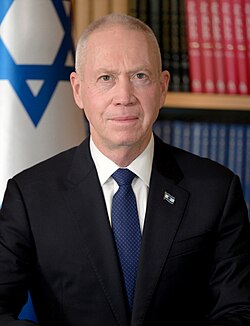
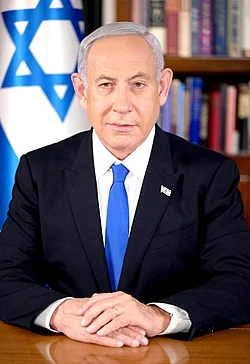
On 21 November 2024, the International Criminal Court’s Pre-Trial Chamber I issued arrest warrants for Prime Minister Benjamin Netanyahu and former Defence Minister Yoav Gallant. The Court found reasonable grounds to believe they bear criminal responsibility for the war crime of starvation as a method of warfare and the crimes against humanity of murder, persecution and other inhumane acts, for conduct from at least 8 October 2023 to 20 May 2024. The same day it issued a warrant for Hamas commander Mohammed Deif. Israel’s jurisdictional challenge was rejected [20][21].

The genocide finding

A growing set of organizations have concluded that Israel is committing genocide in Gaza. Amnesty International reached this conclusion in December 2024; Human Rights Watch issued a related finding; and in July 2025 the Israeli organizations B’Tselem and Physicians for Human Rights Israel became the first Israeli groups to state the same. Israel and the United States reject the characterization, and it is legally contested, but the conclusions of these named bodies are a matter of public record [22][23][24].

Statements by officials

Several Israeli officials have made on-record statements that human rights bodies cite as evidence of intent. In October 2023, then-Defence Minister Yoav Gallant announced a “complete siege” of Gaza, referring to “human animals.” Prime Minister Netanyahu invoked the biblical “Amalek” in a November 2023 speech, language later cited in South Africa’s ICJ genocide case. These quotes are documented in the Amnesty and ICJ filings, and this dossier points to those primary records rather than reproducing decontextualized fragments [22][24].

Recognition of Palestine over time

International recognition of the State of Palestine has risen sharply. Palestine was declared in 1988 and quickly recognized by dozens of states. In May 2024, Spain, Ireland and Norway recognized it, followed by Slovenia, Armenia and several Caribbean nations. In September 2025, in a coordinated move around the UN General Assembly, the United Kingdom, Canada, Australia, Portugal and France — the first G7 states to do so — extended recognition. By that point Palestine was recognized by roughly 150 of 193 UN member states. Non-recognizers still include the United States, Germany and Italy [25][26].
Germany and Italy are, moreover, the two European countries that, as of now (July 2026), are blocking the suspension of the trade agreement with Israel.

Nakba

The Nakba (Arabic for "catastrophe") refers to the 1948 Palestinian expulsion and flight, when approximately 750,000 Palestinians were forcibly displaced from their homes during the creation of the State of Israel. This event involved massacres, bombings, psychological warfare, and the destruction of over 500 Palestinian villages and towns by Zionist militias (such as the Haganah, Irgun, and Lehi) and later the Israeli Defense Forces (IDF). The Nakba is not a single event but an ongoing process of displacement, violence, and dispossession that has continued in various forms since 1948

1948 Nakba (The Original Catastrophe)

  • Deir Yassin Massacre (April 9, 1948): Over 100 Palestinians, including women, children, and elderly, were killed by Zionist militias (Irgun and Lehi). This massacre triggered widespread fear and accelerated the flight of Palestinians from their homes
  • Expulsion from Lydda and Ramle (July 1948): Over 70,000 Palestinians were forcibly expelled from these cities by Israeli forces
  • Fall of Haifa (April-May 1948): Around 70,000 Palestinians were displaced from Haifa due to military attacks and psychological warfare
  • Destruction of Palestinian Villages: Over 530 villages were depopulated and destroyed, with many erased from maps and replaced by Israeli settlements
  • Other Massacres: At least 30 documented massacres occurred during 1948, including in Tantura, Eilabun, Safsaf, and Kufr Qasim

Post-1948: Ongoing Nakba (Continuing Dispossession)

The Nakba did not end in 1948. Israel has continued policies of land confiscation, home demolitions, military occupation, and systematic discrimination against Palestinians, leading to further displacement and violence. Key events include:

  • 1956 Kafr Qasim Massacre: Israeli border police killed 48 Palestinian citizens of Israel (including women and children) who were returning from work and unaware of a newly imposed curfew.
  • 1967 Six-Day War (Naksa): Israel occupied the West Bank, Gaza Strip, East Jerusalem, Golan Heights, and Sinai Peninsula, leading to another wave of Palestinian displacement (over 300,000 Palestinians fled or were expelled).
  • 1976 Land Day: Israeli forces killed 6 unarmed Palestinian citizens of Israel during protests against land confiscations in the Galilee.
  • 1982 Sabra and Shatila Massacre (Lebanon): Israeli-allied Phalangist militias killed hundreds to thousands of Palestinian refugees in Lebanese refugee camps under Israeli military oversight.
  • First Intifada (1987-1993): Over 1,900 Palestinians were killed by Israeli forces during the uprising against occupation.
  • Second Intifada (2000-2005): Over 3,000 Palestinians were killed, with widespread destruction of infrastructure and homes.
  • 2008-2009 Gaza War: Over 1,400 Palestinians (including 300 children) were killed in a 22-day Israeli military offensive.
  • 2014 Gaza War: Over 2,200 Palestinians (including 500 children) were killed in a 50-day Israeli assault.
  • 2018-2019 Great March of Return (Gaza): Israeli snipers killed over 200 Palestinians and injured thousands during protests near the Gaza-Israel border.
  • 2021 Gaza Conflict: 260 Palestinians (including 66 children) were killed in an 11-day Israeli offensive.
  • 2022-2023: Rising Settler Violence and Military Raids: Increased attacks by Israeli settlers and military operations in the West Bank, leading to hundreds of Palestinian deaths and forced displacements.
  • 2023-2026 Gaza Wars: As of 2026, over 75,000 Palestinians have been killed in Gaza due to Israeli military operations, with mass destruction of infrastructure, hospitals, and civilian areas

Key Themes of the Nakba

  • Ethnic Cleansing: Systematic expulsion of Palestinians from their homeland.
  • Massacres: Dozens of documented massacres against Palestinian civilians.
  • Destruction of Villages: Over 530 Palestinian villages were destroyed and erased.
  • Denial of Return: Israel refuses the right of return for Palestinian refugees, as guaranteed by UN Resolution 194.
  • Ongoing Dispossession: Continued land confiscations, home demolitions, and military occupation in the West Bank, Gaza, and East Jerusalem.
Propose a modification
09

Trade agreements and their reversal

Broad trade ties — and a fast-growing wave of restrictions on settlement goods.

Israel maintains free-trade or association agreements with a large network of partners: the European Union (its largest partner), the United States, EFTA, the UK, Canada, Mercosur, and others across Asia and Latin America. The EU–Israel Association Agreement alone governs roughly a third of Israel’s goods trade [11].

Countries restricting trade with the settlements

A distinct and accelerating trend is national-level bans on goods produced in illegal Israeli settlements — as opposed to trade with Israel proper. Since 2024 several European states have acted where the EU as a bloc has not reached consensus. Spain legislated a ban in September 2025; the Netherlands agreed one in May 2026; Ireland passed its prohibition on 15 July 2026; and Belgium approved its own days later, becoming the fourth European country to do so. Settlement products were already excluded from the EU’s preferential tariff treatment under a 2004 decision; these national measures go further [11][27].

Companies named for sustaining the settlement economy (UN report)

In her July 2025 report to the UN Human Rights Council, From economy of occupation to economy of genocide, UN Special Rapporteur Francesca Albanese named over 45 corporate entities she argues sustain and profit from Israel’s occupation and settlements (a wider database lists roughly 1,000). The report’s scope is broad — arms, tech, energy, finance and more — but several named firms relate directly to trade with, and construction of, the illegal settlements. A representative selection appears below; the companies dispute the report’s characterization, and the United States sanctioned Albanese over it in July 2025 [36].

Selected companies named in the UN Special Rapporteur’s July 2025 report, by sector (illustrative, not exhaustive; see Source [36] for the full list). Named entities dispute the findings.
SectorCompanies named
Heavy machinery (demolition/construction)Caterpillar, Hyundai, Volvo
Construction materialsHeidelberg Materials (via Hanson Israel)
Settlement property & tourismAirbnb, Booking.com
Agritech / agribusinessNetafim
Energy & fuelChevron, BP, Glencore
Retail logistics / shippingA.P. Moller–Maersk
Tech & surveillanceMicrosoft, Google, Amazon, IBM, Palantir, Hewlett Packard Enterprise
Finance & investmentBlackRock, Vanguard, BNP Paribas, Barclays, Allianz, AXA
European national bans on imports from Israeli settlements, 2025–2026 (Source [27]). These target settlement goods specifically, not trade with Israel as a whole.
CountryActionTiming
SpainLegislated import ban on settlement goodsSeptember 2025
NetherlandsAgreed import banMay 2026
IrelandParliamentary prohibition passed15 July 2026
BelgiumFederal government approved import banMid-July 2026
Propose a modification
10

Nuclear status

An undeclared arsenal outside international inspection — alongside three decades of warnings that Iran was about to acquire the very weapons Israel already holds.

Israel is universally understood to be a nuclear-weapons state, yet it has never officially confirmed it — a deliberate policy of nuclear opacity ('neither confirm nor deny'). Independent estimates converge on roughly 90 warheads, with enough plutonium produced at the Dimona reactor for an estimated 100–200 weapons. These figures, from SIPRI, the Federation of American Scientists and arms-control institutes, have stayed broadly consistent for decades [29][30].

Outside the NPT, closed to inspection

Israel is one of only a handful of states that never joined the Nuclear Non-Proliferation Treaty (in force since 1970), which means the International Atomic Energy Agency has no authority to inspect or verify its arsenal. Its main facilities, above all Dimona, have never been placed under IAEA safeguards. This posture was effectively locked in by the 1969 Nixon–Meir understanding, under which Washington stopped pressing for inspections. In December 2014 the UN General Assembly voted 161–5 urging Israel to join the NPT and open its facilities; the resolution was non-binding and Israel has not complied [31].

Critics — including a group of US lawmakers and many Arab states at the IAEA — describe a double standard: Iran, an NPT signatory subject to inspections, faces intense scrutiny, while Israel, outside the treaty, faces none. Israel maintains that its security environment justifies its position [31].

Three decades of 'weeks away' warnings about Iran

Against that backdrop, Israeli leaders — above all Benjamin Netanyahu — have warned for over thirty years that Iran was on the verge of a nuclear weapon. As a parliamentarian in 1992 he said Iran was 'three to five years' from a bomb; he repeated versions of the claim in 1995, 1996, 2002, 2009, and at the 2012 UN General Assembly, where he held up a cartoon bomb and drew a 'red line.' He campaigned on the theme again in 2015 and up to the 2025 strikes on Iran. Prime Minister Shimon Peres made a similar shortened-timeline claim in the 1990s [32].

The pattern is notable because Israel's own intelligence services and the IAEA repeatedly contradicted the public urgency. Leaked cables reported that in 2012, as Netanyahu warned the UN, Israeli intelligence had assessed Iran was 'not performing the activity necessary to produce weapons.' US and IAEA assessments as late as 2025 found no active Iranian weapons program. The predictions have not, to date, materialized [32].

Propose a modification
11

The flotillas: attempts to break the siege by sea

Since the blockade began in 2007, civilian boats have repeatedly tried to reach Gaza by sea. Most were stopped by Israeli forces in international waters and diverted to Ashdod.

Gaza has been under an Israeli naval blockade since 2007 (Section 08). In response, a civilian movement has for nearly two decades sent aid boats toward the coast to break the siege — the Free Gaza Movement, later the Freedom Flotilla Coalition, and in 2025 the Global Sumud Flotilla. The organizers’ stated aim is to deliver humanitarian aid and to challenge the legality of the blockade [33][34].

In 2008, two Free Gaza Movement boats actually reached Gaza — the first and only clean breaks of the blockade. Almost every mission since has been intercepted at sea. The deadliest was the 2010 raid on the Mavi Marmara, part of a six-ship flotilla: Israeli commandos boarded it in international waters roughly 72 nautical miles from Gaza, and ten activists were killed. The boats were diverted to the Israeli port of Ashdod and the passengers deported [33][34].

Where the boats were intercepted

A recurring pattern is that interceptions happen in international waters, well outside the 12-nautical-mile limit — central to critics’ argument that the seizures are unlawful. The map below marks the approximate interception zones of the best-documented missions; all lie in open sea between Cyprus, Egypt and Gaza, and the detained boats were taken to Ashdod, north of Gaza.

GAZAAshdod (diversion port)Cyprus2025 Sumud ~70nm2025 Madleen ~100nm2010 Marmara ~72nm2011 ~50mi2015 FF-IIIInterception zone
Approximate interception zones (schematic). All in international waters; seized vessels were diverted to Ashdod.
2008 Free Gaza Movement
Two boats reach Gaza — the first break of the naval blockade.
2010 Freedom Flotilla / Mavi Marmara
Six ships; boarded ~72 nm out in international waters; 10 killed; diverted to Ashdod.
2011 Freedom Flotilla II / "Freedom Waves"
Intercepted roughly 50 miles from Gaza; activists detained and deported.
2015 Freedom Flotilla III (Marianne)
Intercepted in international waters; the Marianne forced toward Ashdod.
Jun 2025 Madleen
Intercepted ~100 nm (185 km) from Gaza; 12 aboard incl. Greta Thunberg, detained and deported.
Oct 2025 Global Sumud Flotilla
~40+ boats, ~500 activists from ~44 countries; interceptions began ~70 nm out; ~450 detained.
Propose a modification
12

In their own words

Public statements by Israeli officials, cited by human-rights bodies as evidence of intent. Each links to its source; full context is in the filings referenced.

Yoav Gallant (+ Smotrich)
"Human animals", "no innocents in Gaza" (about people in Gaza)
Yoav Gallant (+ Smotrich) Defence Minister (2023) Source [22] · Oct 2023
Benjamin Netanyahu
He invoked the biblical "Amalek", language later cited in the ICJ genocide case.
Benjamin Netanyahu Prime Minister Source [24] · Nov 2023
Bezalel Smotrich (+Vaturi +Eliyahu)
"Wipe Gaza off the face of the earth"
Bezalel Smotrich (+Vaturi +Eliyahu) Israeli Finance Minister 2023-2024
Benjamin Netanyahu (+May Golan)
"Turn Hamas hideouts into rubble", "I am proud of the ruins in Gaza"
Benjamin Netanyahu (+May Golan) Israeli Prime Minister 2023-2024
Shlomo Karhi
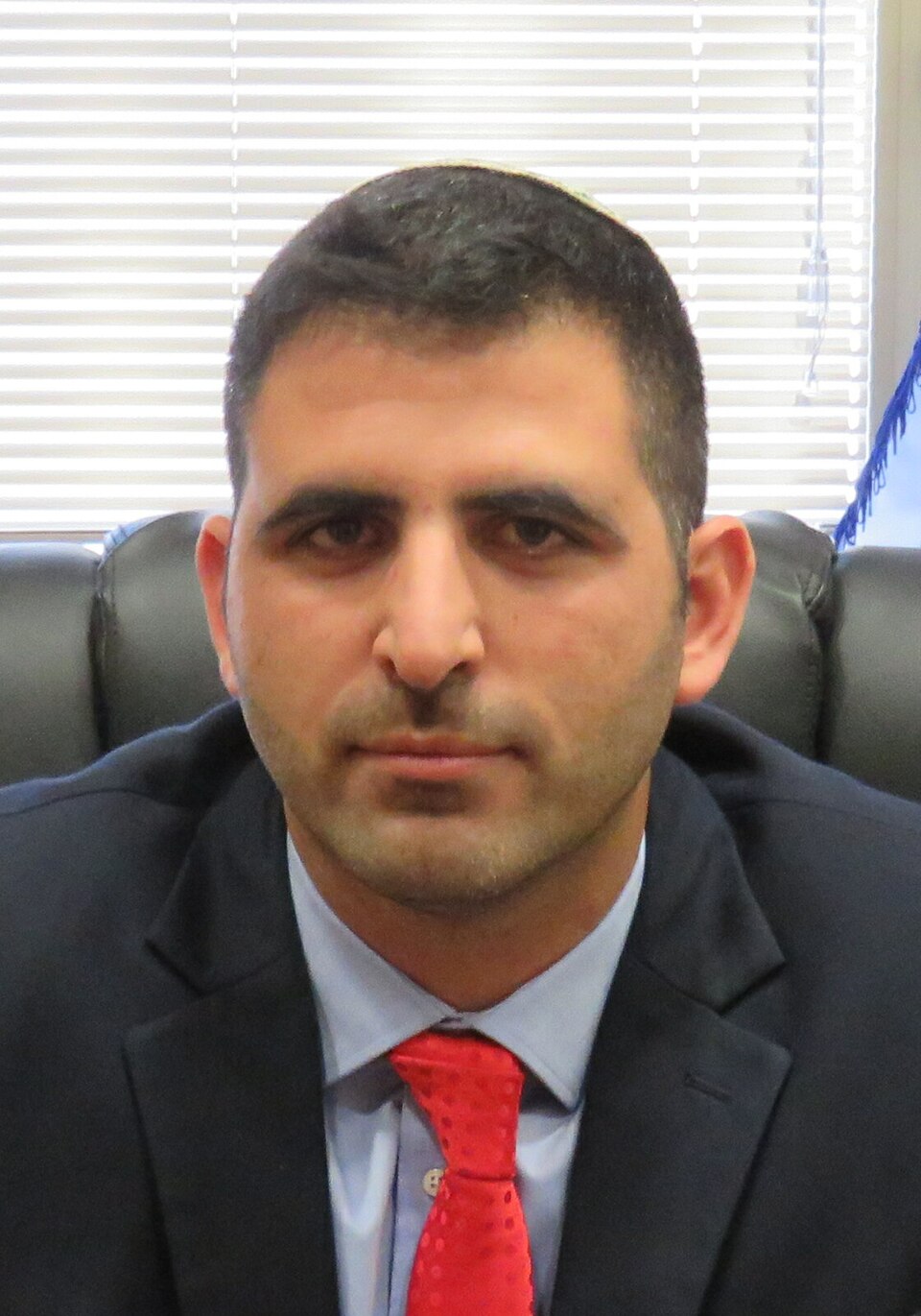
"The Gazans can starve to death"
Shlomo Karhi Israeli Communications Minister 2023-2024
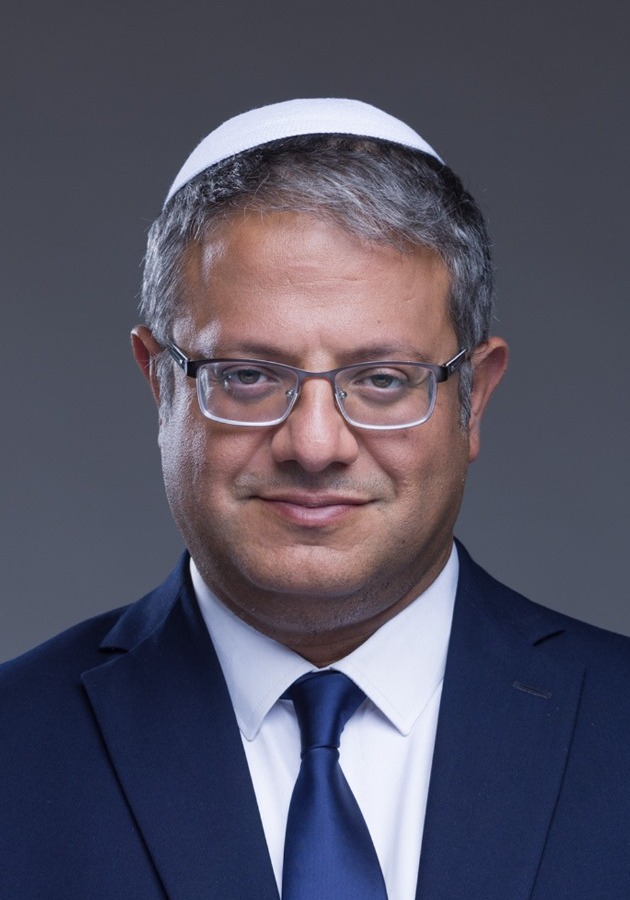
Itamar Ben-Gvir
"Shoot to kill any Palestinian who throws stones". "We need to be eliminating 30-40 people in Gaza every day. They should not live. They are not even people"
Itamar Ben-Gvir Israeli National Security Minister 2022-2023, 2026
Moshe Feiglin
"Let's cut off Gaza's water supply; They'll either leave or die."
Moshe Feiglin Former member of the Knesset interview on Knesset channel
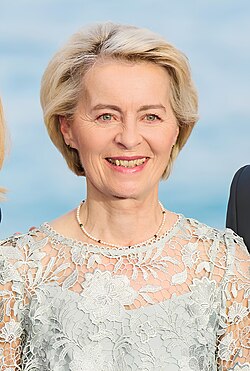
Ursula von der Leyen
"Europe is the values of the Talmud, the Jewish sense of individual responsibility, of justice and solidarity. Over the centuries the Jewish people have been a light unto the nations. And it will be a light unto Europe for many centuries to come. Am Israel Chai." (i.e. "Long live Israel")
Ursula von der Leyen President of the European Commission Source [38] · Ben-Gurion University, June 2022
13

Notable supporters and advocates

Public figures documented as prominent active supporters of Israel (active support, in particular in light of the genocide in Palestine since its recognition by several organizations).

Giorgia Meloni
Giorgia Meloni
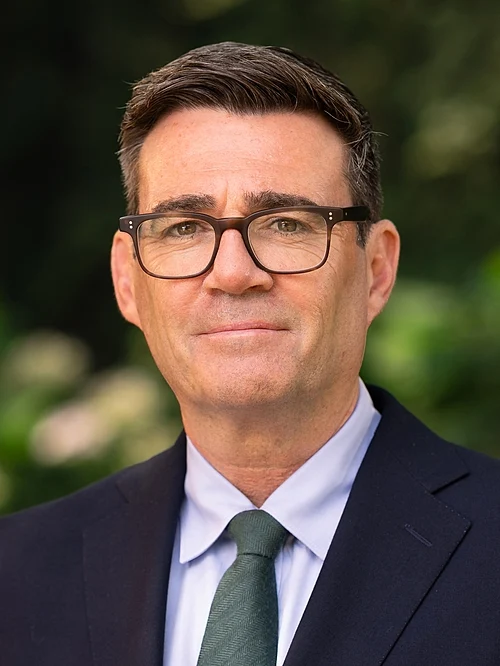
Andy Burnham
Andy Burnham
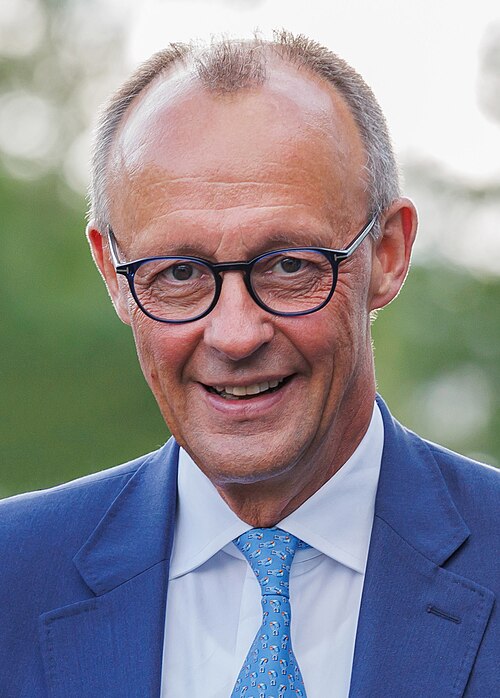
Friedrich Merz
Friedrich Merz
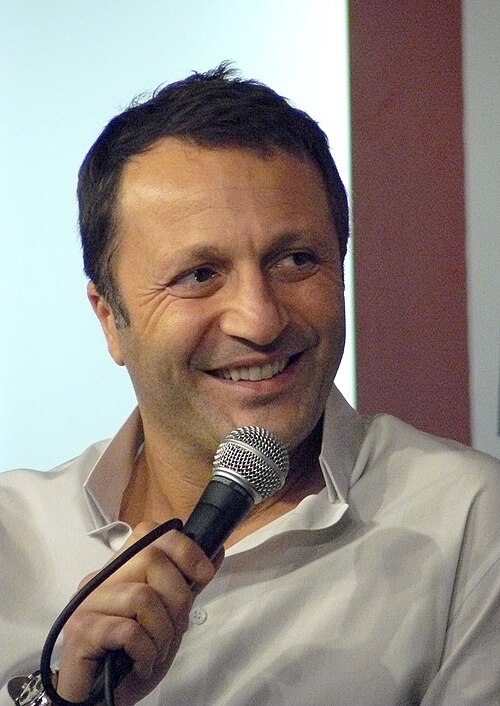
Jacques Essebag (Arthur)
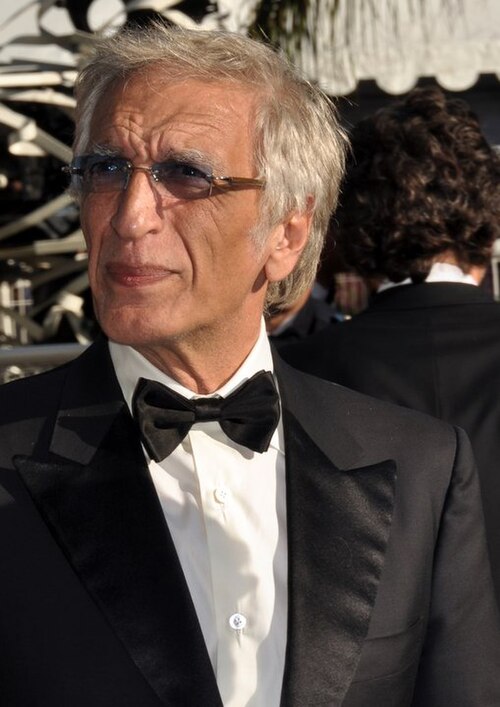
Gérard Darmon
Gérard Darmon
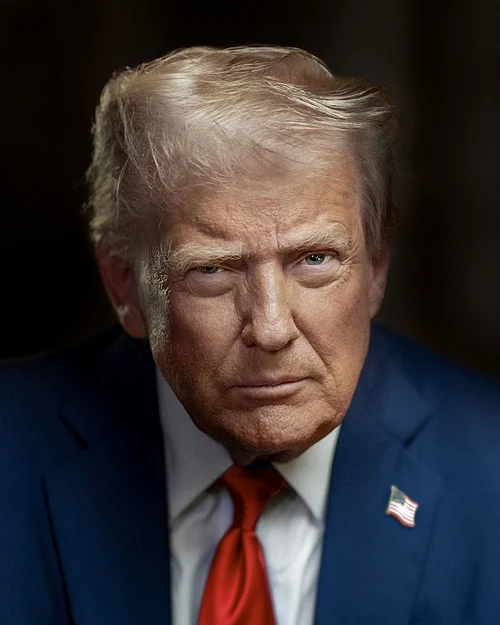
Donald Trump
Donald Trump
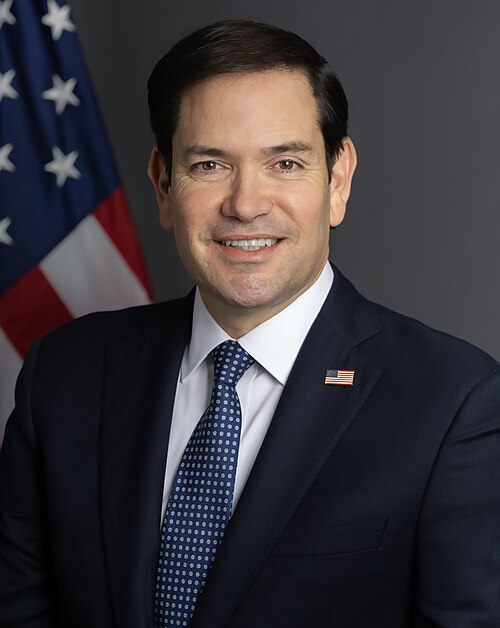
Marco Rubio
Marco Rubio
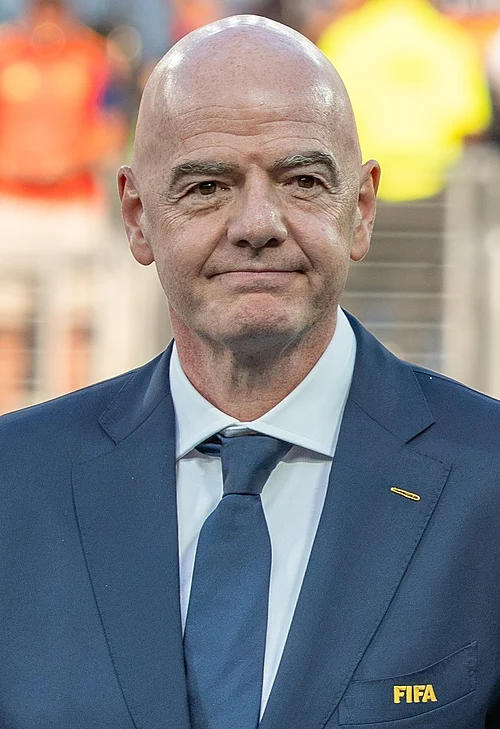
Gianni Infantino
Gianni Infantino
Boy George
Boy George
14

Sources

Primary and reputable secondary sources. Follow the links to verify or challenge any claim.

  1. UN General Assembly Resolution 181 (Partition Plan), 1947 — United Nations. un.org/unispal
  2. Israel’s Declaration of Independence, 1948; US recognition — State Dept. history.state.gov
  3. King David Hotel bombing, 22 July 1946 — Encyclopædia Britannica. britannica.com
  4. History and founding of Mossad (1949) — Encyclopædia Britannica. britannica.com
  5. Israel’s Basic Laws and absence of a constitution — Israel Democracy Institute. en.idi.org.il
  6. Israel’s undefined borders / the Green Line — Council on Foreign Relations. cfr.org
  7. WZO Settlement Division; West Bank settlement funding — Peace Now. peacenow.org.il
  8. ICJ Advisory Opinion on the occupied Palestinian territory, July 2024 — ICJ. icj-cij.org
  9. U.S. Aid to Israel — Council on Foreign Relations. cfr.org
  10. 2016 U.S.–Israel Memorandum of Understanding — USAFacts. usafacts.org
  11. EU–Israel trade & Association Agreement — European Commission. ec.europa.eu
  12. Israel and the Rome Statute / ICC jurisdiction — International Criminal Court. icc-cpi.int/palestine
  13. Amnesty International, “Israel’s apartheid against Palestinians,” 2022. amnesty.org
  14. Unit 8200, alumni companies, NSO/Pegasus — Bismarck Analysis. bismarckanalysis.com
  15. Check Point / Nadav Zafrir (former 8200 commander) as CEO. wikipedia.org/wiki/Check_Point
  16. Combined value of 8200-founded cyber firms — JFeed. jfeed.com
  17. AIPAC spending and its affiliated PAC/super PAC — OpenSecrets. opensecrets.org
  18. CRIF and ELNET delegations to Israel — ELNET / travel disclosures. elnet.eu
  19. Gaza blockade, movement restrictions, humanitarian access — UN OCHA. ochaopt.org
  20. ICC Pre-Trial Chamber I arrest warrants, 21 Nov 2024 — ICC. icc-cpi.int
  21. Amnesty statement on ICC warrants, Nov 2024. amnesty.org
  22. Amnesty International genocide report, Dec 2024. amnesty.org
  23. B’Tselem & Physicians for Human Rights Israel genocide conclusions, July 2025. amnesty.org
  24. Analysis of Amnesty & HRW genocide findings — Just Security. justsecurity.org
  25. Countries recognizing Palestine, 2024–2025 — Al Jazeera tracker. aljazeera.com
  26. UK/Canada/Australia/France recognition, Sept 2025 — UNRIC. unric.org
  27. European national bans on settlement imports (ES, NL, IE, BE) — Al Jazeera. aljazeera.com
  28. Assassination of Yitzhak Rabin, 1995 — Encyclopædia Britannica. britannica.com
  29. Israel’s nuclear arsenal (~90 warheads), NPT non-membership, IAEA safeguards — Center for Arms Control and Non-Proliferation. armscontrolcenter.org
  30. SIPRI Yearbook 2025, world nuclear forces (Israel ~90) — SIPRI. sipri.org
  31. Israel outside the NPT; no IAEA inspections; 2014 UNGA resolution — Al Jazeera. aljazeera.com
  32. Netanyahu’s repeated Iran “imminent bomb” warnings (1992–2015) — The Intercept. theintercept.com
  33. Freedom Flotillas: a history of attempts to break Israel’s siege — Al Jazeera. aljazeera.com
  34. What is the Gaza Freedom Flotilla? — Middle East Eye. middleeasteye.net
  35. Israel intercepts the Global Sumud Flotilla, Oct 2025 — Al Jazeera. aljazeera.com
  36. UN Special Rapporteur F. Albanese, ‘From economy of occupation to economy of genocide’, July 2025 — OHCHR (A/HRC/59/23). ohchr.org
  37. Human toll of the Gaza war. wikipedia.org
  38. Speech by Ursula von der Leyen. europa.eu